자본 프로젝트를 계획대로 이끄는 의사결정
Elevate는 발주사와 엔지니어링 및 건설 조직을 위한 Planisware의 자본 프로젝트 관리 플랫폼입니다. 전략, 프로젝트 초기 정의, 스테이지 게이트 거버넌스, 통합 프로젝트 관리, 계약업체 감독, 시운전을 하나의 자본 프로젝트 수명 주기로 연결합니다. 이를 통해 모든 이해관계자가 편차를 조기에 감지하고 승인된 기준선을 보호하며 계획대로 프로젝트를 수행할 수 있습니다. 이 모든 기능을 AI 기반 클라우드 플랫폼 하나에서 제공합니다.
Leading organizations have chosen Planisware to manage their capital projects
엔지니어링 및 건설의 미래는 지금 결정됩니다
중요한 의사결정이 지연되거나, 불완전한 근거로 내려지거나, 해결되지 않은 채 남아 있으면 자본 프로젝트의 예측 가능성이 떨어집니다.
대부분의 프로젝트 시스템은 팀이 활동을 기록하고 보고하도록 지원합니다.
Planisware Elevate는 발주사와 수행 팀이 자본 프로젝트의 성과를 좌우하는 의사결정을 체계적으로 관리하도록 지원합니다.
비용, 일정, 리스크, 엔지니어링, 계약, 계약업체의 진행 상황은 서로 다른 시스템과 보고 체계에 분산되어 있는 경우가 많습니다. 이러한 단절로 인해 프로젝트가 다음 단계로 진행할 준비가 되었는지 평가하고, 변경의 전체 영향을 파악하며, 예측에 대한 신뢰를 유지하기가 어려워집니다.
Planisware Elevate는 검증된 자본 프로젝트 관리 방식, 연결된 데이터, 의사결정 인텔리전스를 하나의 통제된 프로젝트 모델에 통합합니다.
엔지니어링·건설(E&C) 자본 투자 프로젝트 수행
포트폴리오 거버넌스부터 프로젝트 개발, 통제, 수행까지 연결하는 하나의 통합 솔루션
포트폴리오 거버넌스 및 준비도
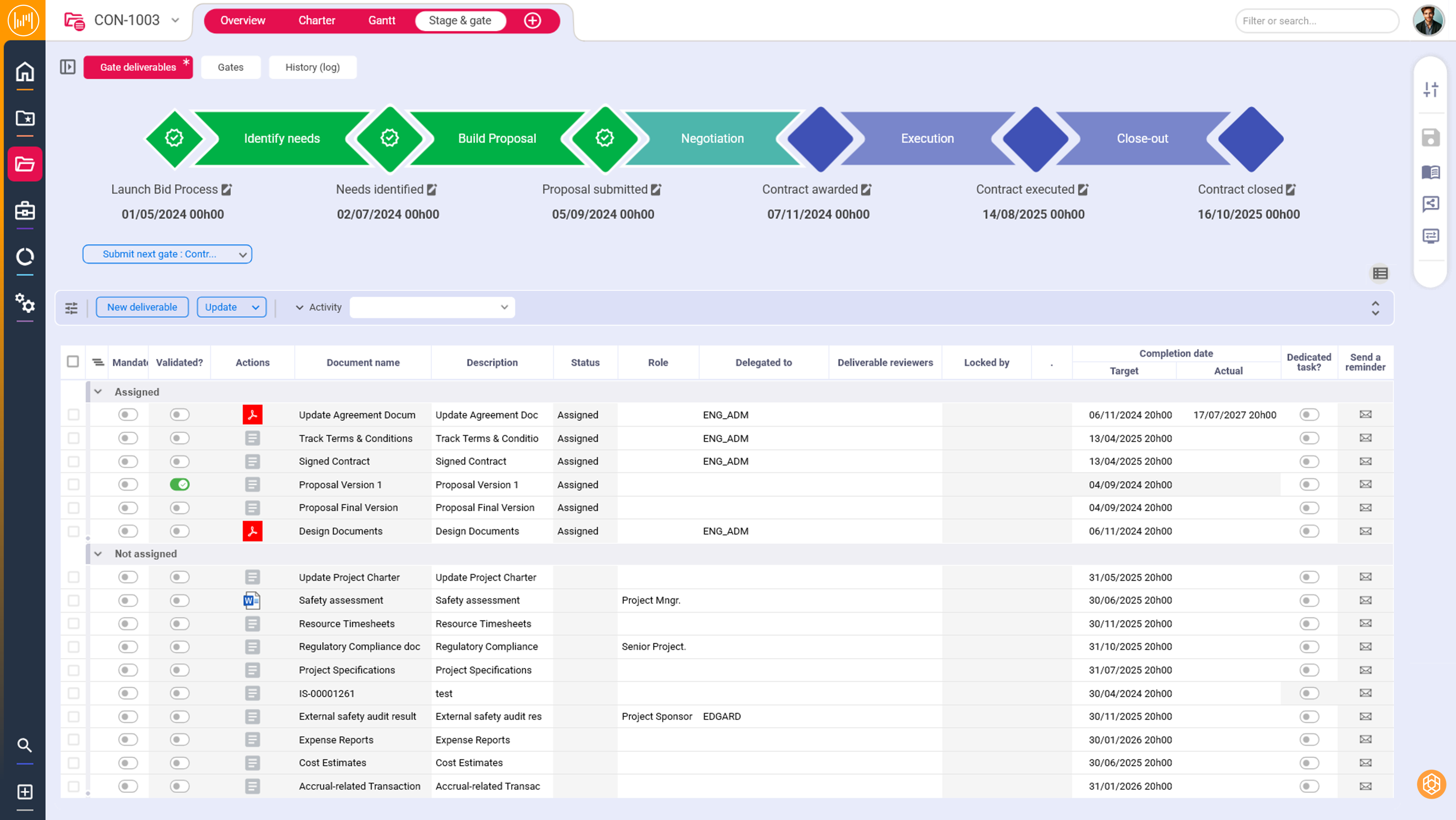
- 프로젝트 개발 및 투자 승인 준비
- 프로그램 관리
- 초기 단계 기획
- 단계별 승인 관리
- 리스크 및 규정 준수
프로젝트 계획 및 통제
- 프로젝트 범위 및 산출물
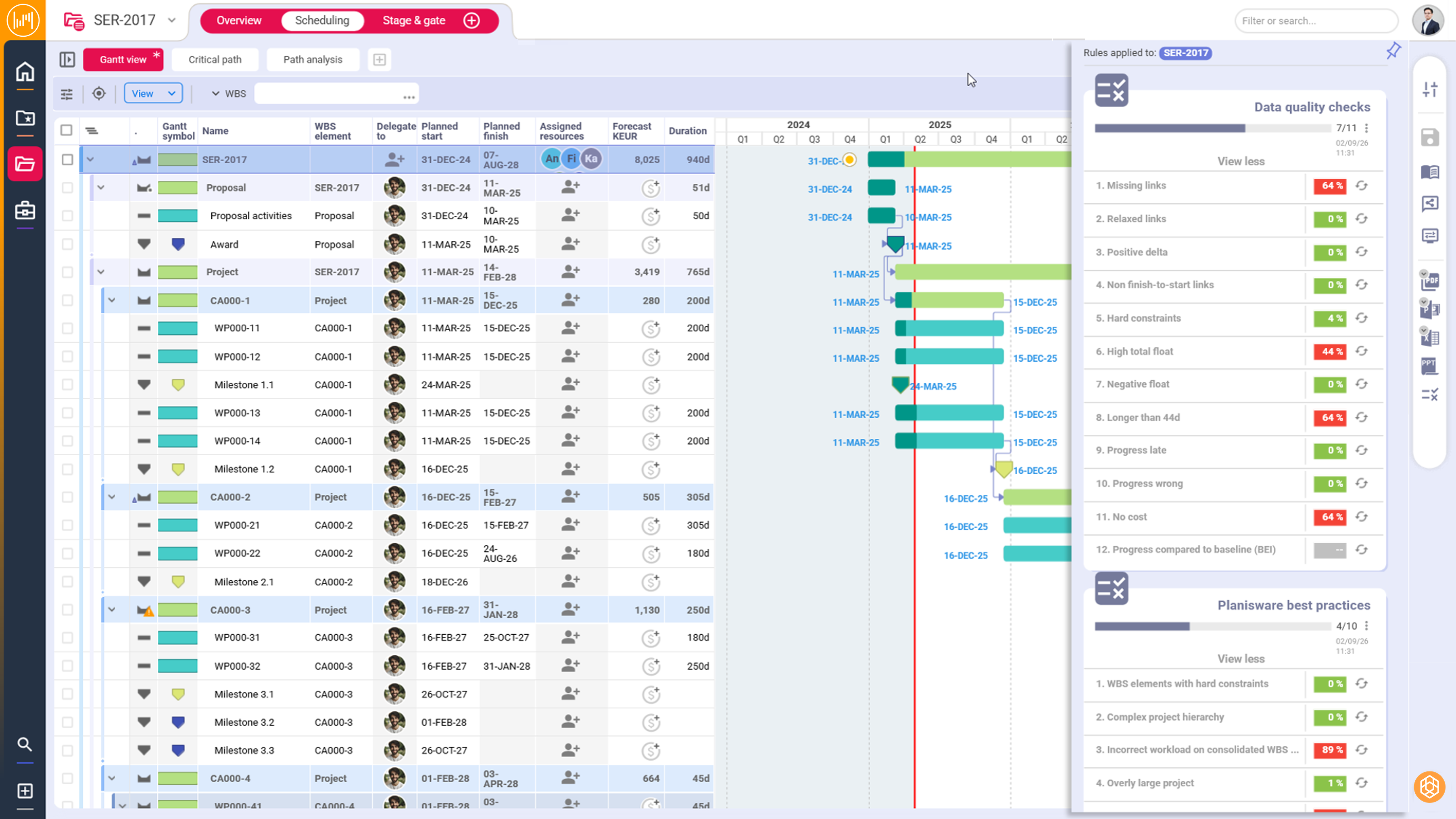
- 계획 수립 및 일정 관리
- 자원 관리
- 원가 통제
- 성과 관리
프로젝트 실행 및 수행
- 작업 패키지 관리
- 계약 관리
- 문서 및 서신 관리
- 현장 작업 수행
- 품질 관리
Planisware Elevate – Define the right projects. Build credible plans. Maintain control. Align execution. Deliver operationally ready assets.
T성공적인 자본 프로젝트 수행을 가로막는 핵심 과제
대규모 자본 프로젝트에서는 모든 불확실성이 해소되기 훨씬 전부터 중요한 자금 조달, 단계별 게이트, 실행 관련 의사결정을 내려야 합니다. 그러나 프로젝트 준비도, 비용, 리스크, 엔지니어링 진행 상황, 수행 성과가 여러 팀과 시스템에 분산되어 있어 전체 상황을 파악하기가 어렵습니다.
준비되기 전에 승인되는 프로젝트
과제: 중요한 투자 결정이 불완전한 범위 정의, 부족한 엔지니어링 성숙도, 미해결 리스크, 프로젝트의 성공적인 수행 가능성을 입증하는 근거가 부족한 상태에서 내려지는 경우가 많습니다. 조직에는 자본을 투입하기 전에 프로젝트 준비도를 일관된 방식으로 평가할 수 있는 체계가 부족합니다.
비즈니스 영향:
- 비현실적인 예산과 일정
- 예견 가능한 초과 비용과 지연을 뒤늦게 발견
- 재작업, 재계획, 불안정한 범위
- 투자 의사결정에 대한 신뢰 저하
핵심 질문: “이 프로젝트를 다음 단계로 진행할 준비가 정말 되었는가?”
전체 상황을 파악하지 못한 채 내려지는 의사결정
과제: 비용, 일정, 리스크, 엔지니어링, 계약, 현장 실행, 재무 성과가 서로 단절된 시스템과 스프레드시트에서 관리됩니다. 의사결정자는 정보의 의미를 파악하는 것보다 서로 다른 정보를 대조하고 조정하는 데 더 많은 시간을 소비합니다.
비즈니스 영향:
- 서로 다른 여러 버전의 정보
- 상충하는 예측
- 느린 의사결정
- 영향과 상충 관계에 대한 제한적인 가시성
- 타당성을 입증하기 어려운 거버넌스 의사결정
핵심 질문: “올바른 결정을 내리기에 충분한 근거가 있는가?”
변화 속도를 따라가지 못하는 거버넌스
과제: 자본 프로젝트는 끊임없이 변화하는 환경에서 진행됩니다. 범위가 바뀌고, 리스크가 현실화되며, 엔지니어링 변경이 발생하고, 계약업체의 작업이 지연되며, 시장 상황도 변합니다. 대부분의 조직은 변화를 감지할 수 있지만, 효과적으로 대응할 만큼 신속하게 그 영향을 파악하는 데 어려움을 겪습니다.
비즈니스 영향:
- 범위, 비용, 일정에 대한 통제력 상실
- 승인 지연과 느린 대응
- 부정확한 예측
- 클레임, 분쟁, 수행 불확실성
- 이해관계자의 신뢰 저하
핵심 질문: “현실이 바뀔 때 신속하고 일관되게 대응할 수 있는가?”


자본 프로젝트의 진행을 늦추는 마찰을 해소하도록 설계되었습니다
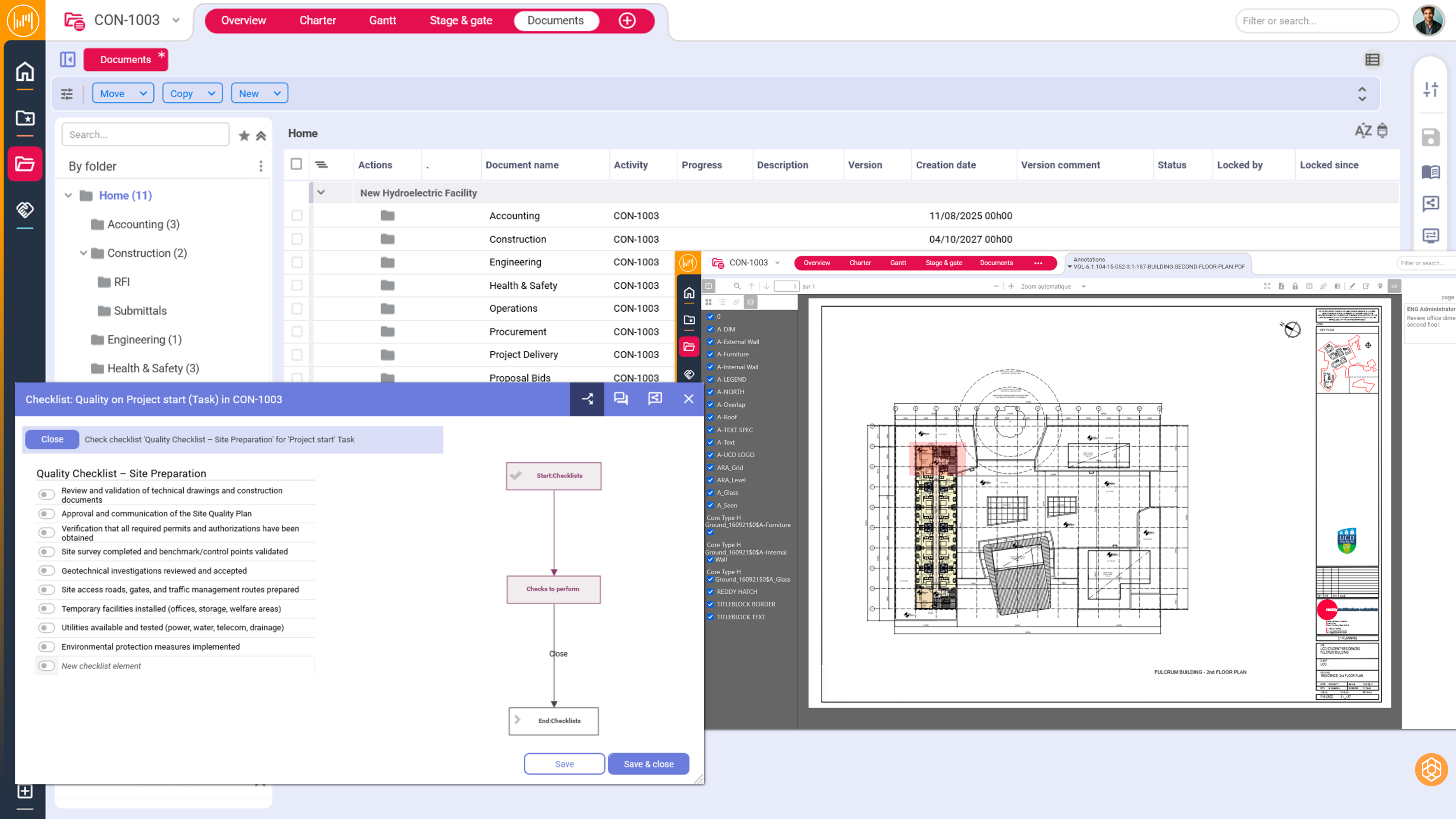
Almost everything an asset owner knows about a project originates elsewhere: engineering maturity, contractor schedules, field progress, cost actuals and change requests. Planisware Elevate provides one model of the project, consolidating contractor information, controls and readiness criteria rather than relying on external reporting.
Built for how capital projects actually work
Define and mature candidate capital projects
Planisware Elevate structures front-end planning to reduce ambiguity, strengthen project definition, and support defensible funding decisions before execution begins.
- Project development: request intake, candidate project development, and scenario analysis
- Project readiness: scope definition, OKR criteria, and design maturity tracking (Class 5 → Class 1)
- Governance: gate reviews and structured stage-gate processes, FEL and PDRI scoring.
Establish a credible integrated baseline
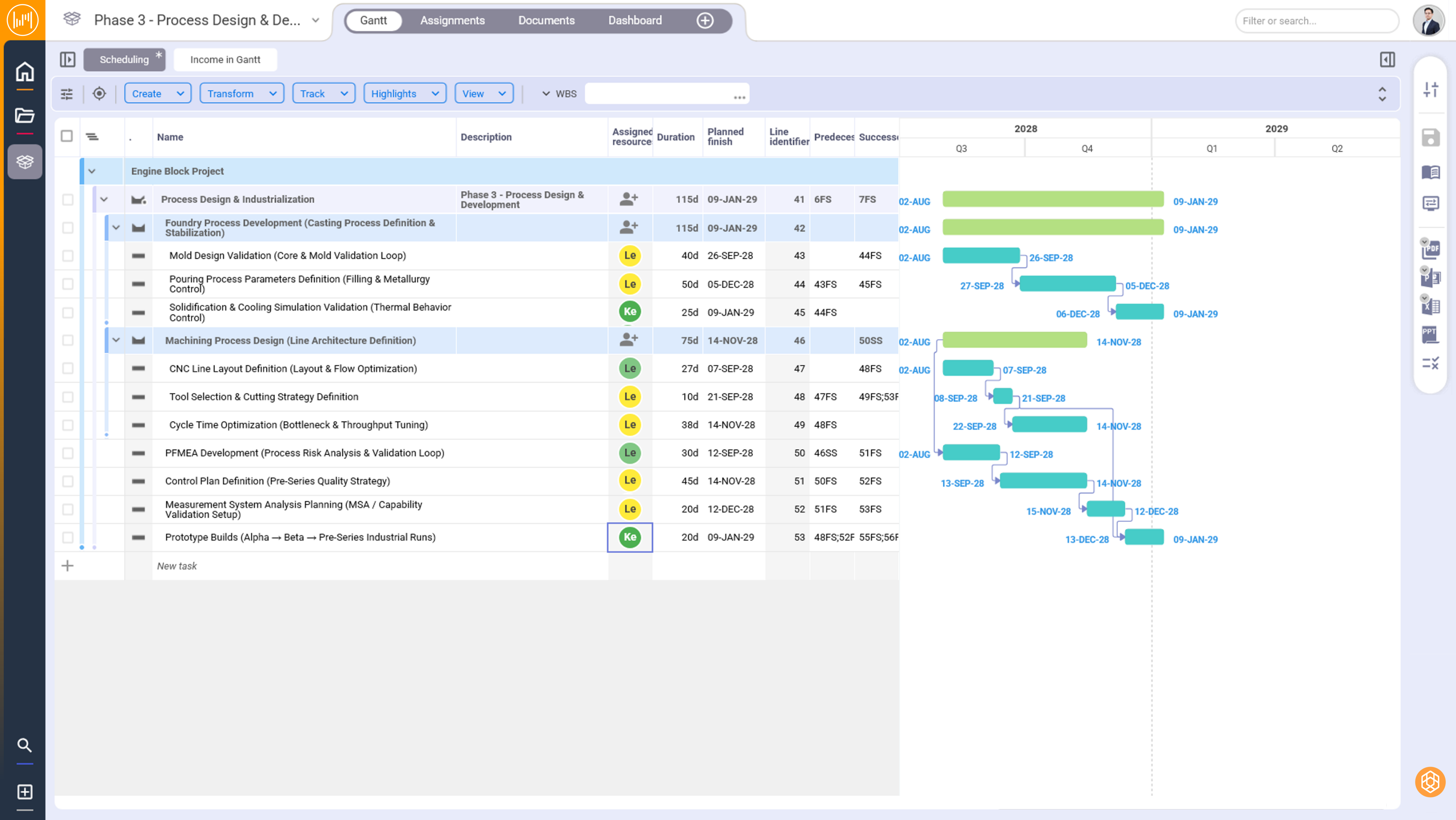
Planisware Elevate connects scope, maturity, work breakdown, sequencing, cost, schedule, and risk into a credible baseline for execution, forecasting, and performance measurement.
- Integrated scope, cost, schedule, and risk planning
- WBS/PBS, engineering and construction sequencing, and Advanced Work Packaging (EWP, CWP, PWP, IWP)
- Quantitative and qualitative risk analysis, Monte Carlo simulations, probabilistic forecasting, and scenario simulations
Control cost, schedule, risk and change
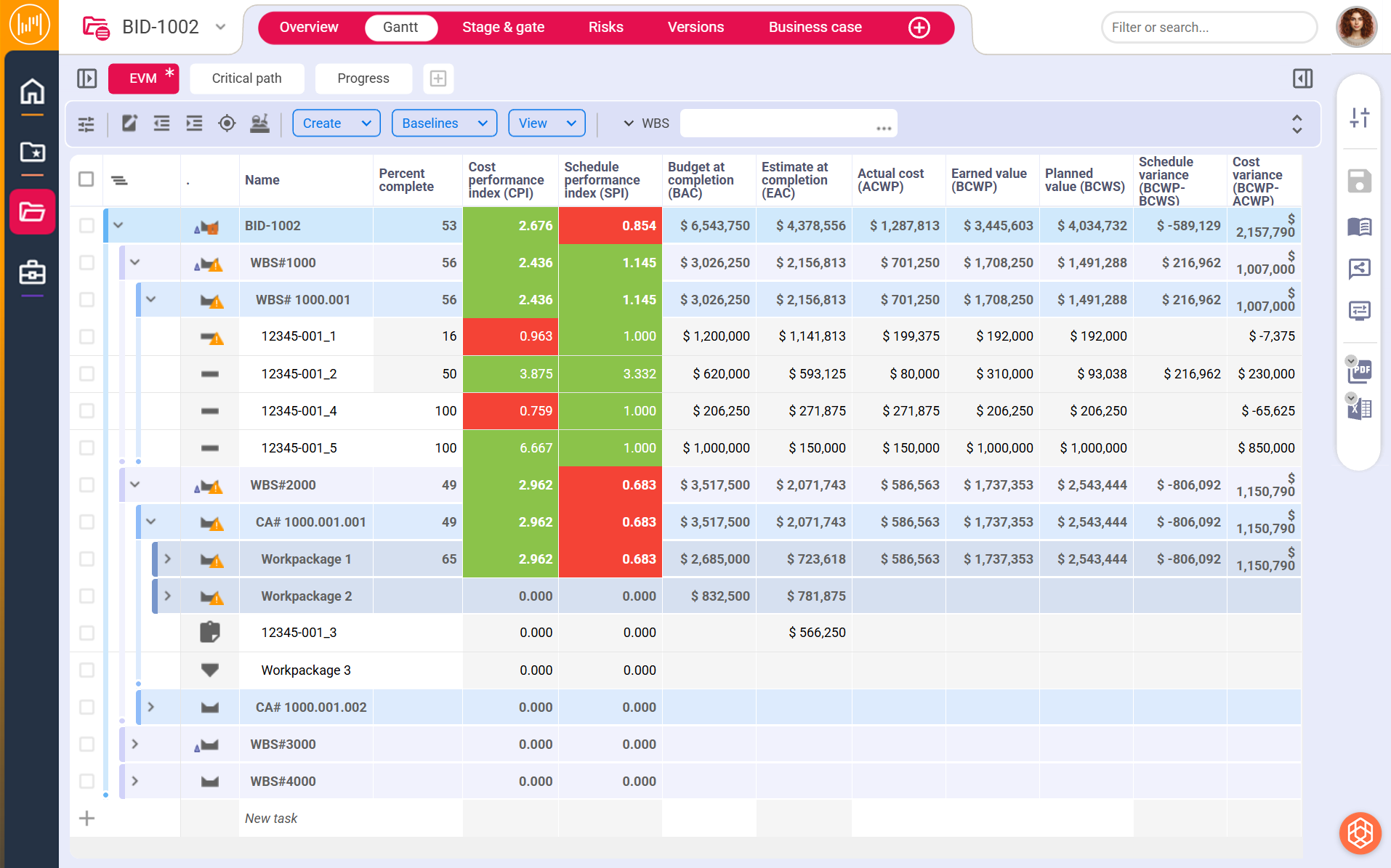
Planisware Elevate connects progress, change, cost, schedule, and risk management so teams can detect deviations early, understand impact, and take corrective action.
- Integrated risk management across cost, schedule, execution, portfolio exposure, and systemic risk detection
- Variations, change order management, structured impact analysis, approval workflows, and TCM alignment
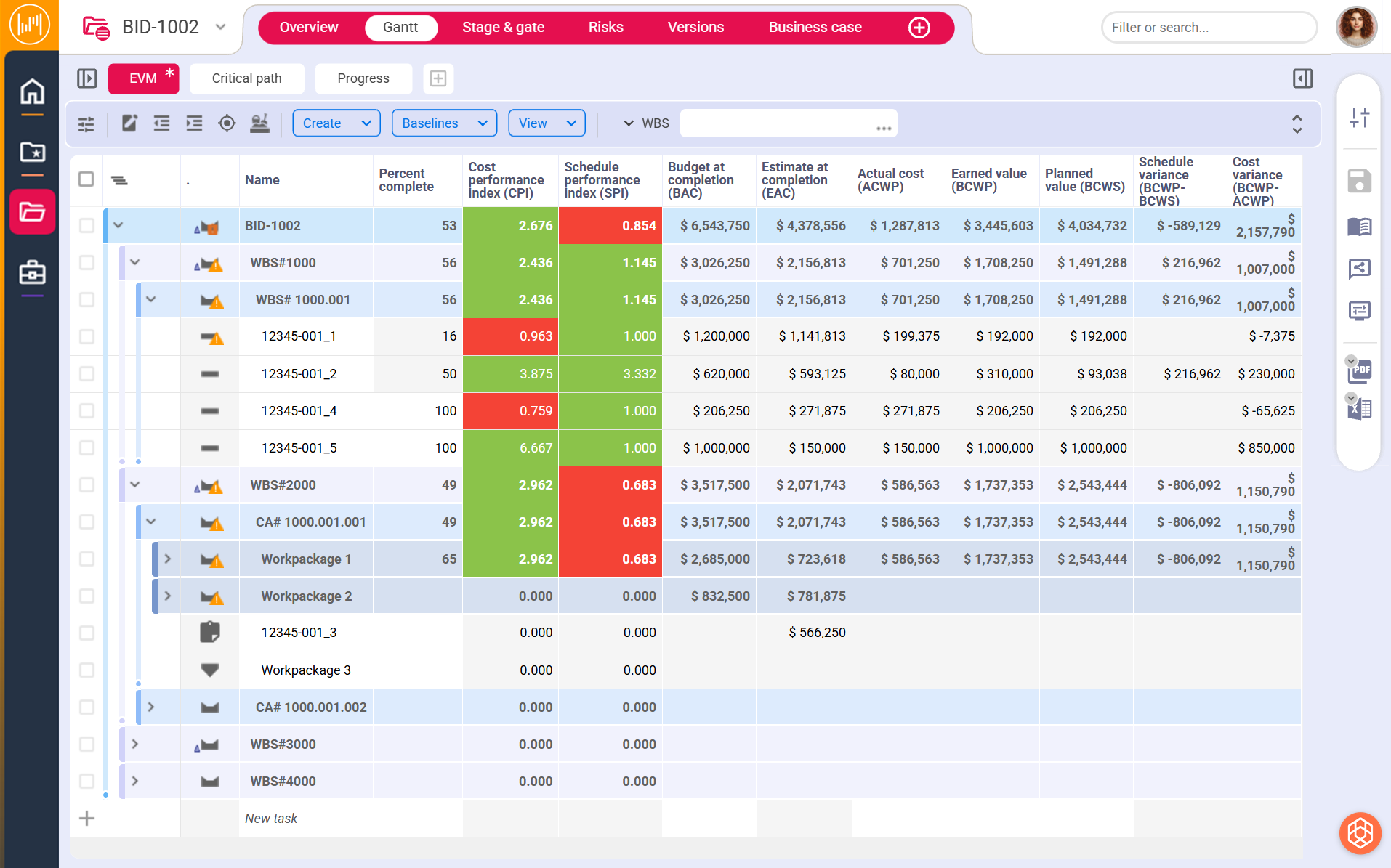
- Continuous reforecasting, cash-flow tracking, EVM, field reporting, productivity tracking, and predictive risk identification
Deliver Work Packages with Confidence
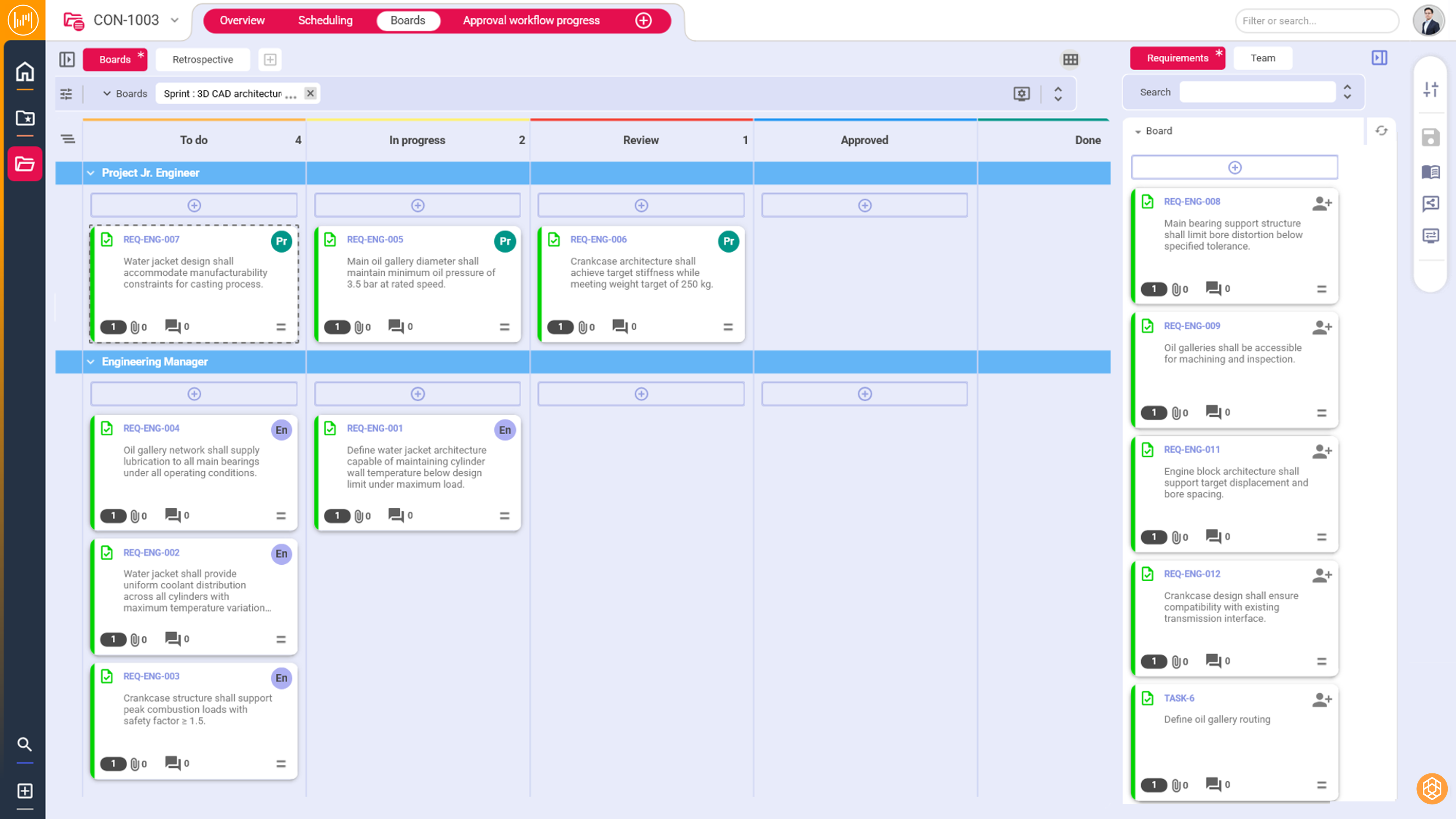
Planisware Elevate structures coordination around deliverables, work packages, workflows, approvals, and shared execution decisions across contractors, disciplines, and delivery teams.
- Alignment between engineering deliverables, field execution, and Advanced Work Packaging (EWP, CWP, PWP, IWP)
- Consolidated progress, productivity, and work-package performance monitoring
- Cross-team coordination, project workflows, approvals, quality, compliance, shared decision context, and full traceability
Prepare for commissioning, handover and operation
Planisware Elevate structures commissioning, inspections, documentation, system readiness, acceptance, and turnover for a controlled transition to operational readiness.
- Commissioning planning, sequencing, system readiness, and work-package readiness tracking
- Inspections, testing, quality, compliance, completion documentation, final acceptance, and certification
- Structured asset turnover, traceability of actions, approvals, readiness decisions, and shared stakeholder visibility
Built for Capital projects across industries where decisions cannot be delayed
Megaprojects & Large Scale Capital Programs – Control complexity at the highest scale
Megaprojects involve billions in CAPEX, multi-year timelines, and thousands of stakeholders across engineering, procurement, and construction.
These environments require rigorous front-end planning, integrated risk management, and absolute alignment between investment decisions and execution reality.
Planisware Elevate provides the governance, visibility, and decision intelligence needed to manage dependencies, anticipate risks, and ensure that every critical decision is structured, traceable, and defensible – from initial investment to final handover.
Industrial & EPC Projects – Deliver complex engineering projects with confidence
Industrial and EPC projects demand tight coordination between engineering maturity, procurement, contractors, and field execution – often under extreme cost and schedule pressure.
Planisware Elevate connects design, planning, and construction through structured work packaging, integrated cost control, and real-time execution visibility – ensuring that projects are not just planned, but fully executable.
Infrastructure & Transportation Projects – Align multiple stakeholders in complex delivery environments
Infrastructure projects combine public and private stakeholders, regulatory constraints, and long delivery cycles with multiple contractors and interfaces.
Planisware Elevate structures coordination across all parties – aligning workflows, contracts, and schedules – and provides a shared decision framework that ensures transparency, governance, and predictable delivery at scale.
Utilities Programs – Structure project development and governance across capital programs
Utilities and network operators oversee hundreds of concurrent capital projects across geographies, assets, and delivery teams. Ensuring projects are well-defined, aligned with business requirements, and ready for sanction before execution begins is critical to improving outcomes at scale.
Planisware Elevate helps establish a consistent framework for Project Definition and Sanction Readiness, providing visibility into project maturity, governance milestones, risks, and readiness criteria. Through an Owner's Control Model, organizations can standardize project development, strengthen decision governance, and maintain oversight from concept through execution readiness across large capital programs.
Industrial Facilities – Deliver capital projects with greater definition, control, and operational alignment
Industrial facility owners must develop and deliver modernization, expansion, and brownfield projects while maintaining safe and reliable operations. Managing evolving requirements, project complexity, and stakeholder alignment is critical to reducing execution risk before work begins.
Planisware Elevate helps asset owners strengthen Project Definition and Sanction Readiness by providing structured governance, scope maturity assessment, and integrated change control throughout project development. Through an Owner's Control Model, organizations can maintain visibility over project readiness, risks, and key decision gates while aligning engineering, planning, and execution teams to improve project outcomes without disrupting ongoing operations.
Built for every decision-maker in capital projects
Capital Project & Portfolio Leaders
Fund the right projects and steer strategic outcomes. Prioritize investments, evaluate scenarios, optimize capital allocation, and maintain visibility into value, risk, funding, and portfolio performance.
PMO & Program Managers
Turn strategy into coordinated delivery. Standardize governance, align roadmaps, dependencies, and resources, and ensure projects and programs remain aligned with business objectives from planning through execution.
Project Controls & Finance Teams
Maintain control of cost, schedule, risk, and financial performance. Connect planning, forecasting, cost control, cash flow, and quantitative risk analysis to anticipate deviations early, evaluate scenarios, and support better project decisions.
Operations & Work Package Managers
Translate plans into executable work. Manage Engineering, Procurement, Construction, and Commissioning Work Packages while connecting engineering readiness, constraints, field progress, productivity, quality, and safety to deliver reliable execution.
Sustained Leadership, Trusted Recognition
AI Assistants & Automation
Simplify how teams interact with complex project data
- Automatically read and structure project documents and requests
- Generate summaries, explanations, and decision narratives
- Support users with contextual insights and guided workflows
- Accelerate onboarding and adoption across teams
From manual effort → augmented decision-making at scale
Decision Intelligence
Turn data into clear, explainable decisions
- Detect misalignment, cost anomalies, and emerging risks
- Identify projects that are not ready for investment (maturity, risk, capacity)
- Surface portfolio drift, contractor overload, and financial exposure
- Provide explainable recommendations with full traceability
From fragmented signals → clear decisions you can defend
Predictive & Scenario Intelligence
Understand outcomes before they happen
- Run scenario simulations across cost, schedule, and risk
- Generate rolling forecasts based on real project data
- Provide probabilistic views (P50 / P80 / P90)
- Anticipate delays, overruns, and execution bottlenecks
From reactive reporting → forward-looking control
Execution Intelligence
Connect decisions to real-world project execution
- Detect inconsistencies in estimates, schedules, and cost structures
- Identify root causes of delays, variations, and productivity issues
- Monitor execution performance in real time (field, work packages, contractors)
- Enforce workflows and trigger actions based on thresholds
From insight → action across the project lifecycle
Planisware Elevate integrates AI directly into the workflows that drive capital project performance – not as a standalone tool, but as a layer embedded across planning, control, and execution.
AI Embedded across the capital project lifecycle
주요 고객 성공 사례를 확인해 보세요.
Smarter engineering solutions start here
Want the full picture?
Explore
Educate
Experience
Frequently Asked Questions
What resources can I consult for more information about capital project management and project controls?
These Planisware resources provide a practical learning path from capital project fundamentals and governance to integrated controls, earned value, cost forecasting, and enterprise integration.
- Capital Project Planning Platform: Why Planisware Leads Project Controls and Engineering: Explains why large capital programs need integrated scope, cost, schedule, and risk rather than disconnected reporting tools.
- Choosing a Project Controls Platform for EVM and Cost Control: Provides selection criteria for baselines, actual-cost feeds, earned value, variance analysis, and audit-ready change control.
- Best PPM Tools for Earned Value and Financial Analytics: Clarifies how EVM, forecasting, and financial analytics support earlier intervention and more reliable estimates at completion.
- Project Cost Management: Real-Time Portfolio Scheduling: Examines how leaders can connect budgets, forecasts, schedules, and actuals without manual consolidation.
- Governance and Compliance Tools for Portfolio Managers: Explores decision rights, stage gates, role-based workflows, audit trails, and continuous assurance.
- How Enterprise PMOs Achieve Centralized Project Oversight: Describes the operating model and data foundation required for consistent oversight across projects and programs.
- Seamless Integration with Critical Enterprise Applications: Covers connector and API options used to combine ERP, scheduling, analytics, and other enterprise data.
Next step: Start with the capital project planning guide, then use the project controls and integration resources to build an executive evaluation checklist.
What is capital project management software, and when does an organization need it?
Capital project management software coordinates governance and delivery for high-value, engineering-intensive projects from project definition and sanction readiness through execution, commissioning, and handover. It becomes necessary when fragmented data prevents leaders from protecting the approved baseline and forecasting outcomes with confidence.
- Scale and complexity: Multiple projects, contractors, work packages, interfaces, and decision authorities must be governed consistently.
- Control requirements: Scope, schedule, cost, risk, change, commitments, and progress need to be assessed as connected variables.
- Assurance requirements: Gate evidence, approvals, baseline revisions, and handover decisions must remain traceable.
The distinction is material. A Planisware article citing a McKinsey review of more than 300 billion-dollar megaprojects reports average cost overruns of approximately 80% and schedule delays of about 50%. These figures illustrate why task tracking alone is insufficient for capital delivery.
Planisware Elevate applies this discipline in a connected project model covering maturity, integrated baselines, contractor performance, change, and delivery outcomes. For a deeper definition, consult the capital project planning platform guide and the Planisware Resource Center.
Next step: Map the decisions currently delayed by reconciliation, unclear ownership, or incomplete evidence.
How should executives compare integrated project controls software with scheduling, ERP, and CDE tools?
Executives should compare these systems by the management question each one answers, not by overlapping feature lists. Integrated project controls software connects delivery performance and governance; scheduling, ERP, and CDE tools remain authoritative in their specialist domains.
| System | Primary management purpose | Executive evaluation question |
| Scheduling | Activity logic, milestones, critical path, and detailed plans | Can schedule changes be assessed with cost, risk, and progress impacts? |
| ERP | Financial transactions, actuals, commitments, and accounting control | Do financial actuals flow reliably into current forecasts? |
| CDE | Controlled project information, models, drawings, and documents | Can delivery decisions reference current, governed information? |
| Project controls platform | Baseline, forecast, risk, change, EVM, and program oversight | Can leaders see consequences across disciplines before approving action? |
Integration is therefore a core selection criterion. Planisware reports that 80%+ of its deployments include at least one integration. Planisware Elevate can serve as the governed controls and decision layer while existing systems continue to perform their operational roles.
See the enterprise integration overview and the project controls platform selection guide.
Next step: Evaluate data ownership, update cadence, reconciliation effort, and decision latency before discussing replacement.
Which metrics show that capital project predictability is improving?
Capital project predictability improves when leading indicators become more stable and forecasts become more accurate, not simply when teams produce more reports. A balanced executive scorecard should connect baseline performance, forecast confidence, risk exposure, change, and execution readiness.
| Category | Metrics | Purpose |
| Cost and schedule | CPI, SPI, variance at completion, milestone trend | Shows whether delivery efficiency and timing are drifting from the approved baseline. |
| Forecast | EAC stability, ETC movement, forecast accuracy, P50/P80 confidence | Tests whether expected outcomes are becoming more reliable. |
| Change and risk | Pending change exposure, approval cycle time, contingency drawdown, risk movement | Reveals whether emerging exposure is understood and governed promptly. |
| Readiness | Gate criteria complete, constraints cleared, work packages ready, punch items outstanding | Confirms that work and handover decisions are supported by evidence. |
EVM provides three foundational data points: planned value, earned value, and actual cost. At enterprise scale, one published Planisware example describes an ADNOC rollout from 10 projects to more than 2,000 in 9 months, supported by digital approvals and a shared source of truth.
Explore earned value and financial analytics, real-time cost and scheduling, and the ADNOC customer case study.
Next step: Select a small set of leading and lagging indicators tied to explicit decision thresholds and owners.
How can asset owners govern multiple EPCs and contractors without slowing delivery?
Asset owners can govern multiple EPCs and contractors effectively by standardizing the evidence, interfaces, and decision rights required for oversight while allowing each delivery partner to retain appropriate execution methods. The objective is consistent assurance, not centralized micromanagement.
Define common data standards. Align coding structures, reporting periods, progress rules, and forecast definitions.
Clarify decision rights. Set approval thresholds, delegated authority, escalation paths, and required gate evidence.
Connect interfaces. Link owner, EPC, scheduling, financial, and document data without duplicating system ownership.
Govern change consistently. Assess cost, schedule, risk, and contractual effects before baseline revisions are approved.
Measure readiness and outcomes. Track work-package constraints, milestones, forecast movement, commissioning evidence, and open actions.

Planisware internal E&C research notes that 94% of respondent firms did not deliver every project on time and/or on budget; among projects that slipped, 64% were at least one month late and 76% exceeded budget by at least 6%. A governed data model helps leaders distinguish isolated contractor issues from systemic program exposure.
Planisware Elevate supports standardized workflows, permissions, reporting, progress oversight, and traceability. Related guidance includes governance and compliance tools, centralized project oversight, and the E&C capital projects page.
Next step: Start with a contractor data and decision-rights charter for one flagship project.
What capabilities help reduce capital project cost and schedule overruns?
Reducing capital project overruns requires earlier detection and faster governance of the conditions that create them. The strongest controls connect baseline integrity, forecast movement, risk, change, and execution readiness so leaders can intervene while options remain available.
Integrated baselines: Align scope, WBS, schedule, CBS, risk, and work-package logic.
Forward-looking forecasts: Combine actuals, commitments, ETC, schedule trends, and quantified uncertainty.
Formal change control: Require impact analysis, authority-based approval, version history, and baseline traceability.
Earned value management: Compare planned value, earned value, and actual cost to expose performance variance early.
Readiness controls: Prevent immature scope or constrained work from advancing without evidence.
The Planisware capital project planning guide cites more than 300 megaprojects with average overruns of approximately 80% and delays of about 50%. The implication is not that software removes uncertainty, but that connected controls make uncertainty and its consequences visible sooner.
Planisware Elevate brings cost, schedule, risk, change, progress, and forecasting into one governed model. Review capital project planning and controls, EVM and cost-control platform criteria, and project cost management and scheduling.
Next step: Identify the three variances that currently become visible too late and redesign the data-to-decision workflow around them.
How can an organization implement integrated project controls without replacing its existing systems?
An organization can implement integrated project controls incrementally by defining system ownership, connecting priority data flows, and proving governance on representative projects before scaling. A rip-and-replace program is rarely the only path.
- Define the target decisions. Prioritize the executive and controls decisions that need faster, more reliable evidence.
- Map authoritative sources. Confirm where schedules, actuals, commitments, documents, risks, and progress are maintained.
- Standardize structures. Agree WBS/CBS mappings, calendars, status dates, progress rules, and change classifications.
- Integrate a minimum viable flow. Connect the data required for baseline, forecast, EVM, risk, and change oversight.
- Pilot and scale. Validate calculations, approvals, audit trails, reporting cadence, and responsibilities before extending across programs.
Planisware states that 80%+ of deployments include at least one integration. Its AI maturity research also draws on 243 organizations, reinforcing that governance, skills, and trust are as important as technology when scaling new decision capabilities.
Planisware Elevate can coexist with scheduling, ERP, CDE, BIM, and analytics environments through connectors and APIs. Review the integration options, the AI Reality Check for PPM, and the capital project planning platform guide.

Next step: Run a proof of concept using real baseline, actual-cost, and change data from one representative project.
Does Planisware Elevate replace Primavera P6, ERP systems, or a Common Data Environment (CDE)?
Planisware Elevate is designed to work with the systems organizations already use, complementing them, based on organization-specific needs.

Planisware integrates Primavera P6 and MS Project, ERP and finance (including SAP S/4HANA), BIM, CDE, field and reality-capture tools, and Power BI – through native connectors and a REST API framework. It acts as the project governance and decision layer that connects these systems into one unified portfolio capital project governance, planning, controls, and execution environment with standardized workflows across the entire project ecosystem.